EG254S: IoT System Project - Microcontroller

Increasing the Range of ESP8266 WiFi
(Adapted from: https://www.sparkfun.com/news/2320)
The ESP8266 is one of the many inexpensive IoT development platforms rely on PCB and chip antennas to offer a WiFi connection in the 2.4GHz Industrial, Scientific and Medical (ISM) band. Chip and PCB antennas offer a cheap, compact solution that fits onto a single board, which is often all that’s needed. They are also a good option if you really do not want a visible antenna on your final design.
That being said, PCB and chip antennas can be a poor choice for a few reasons:
- Proximity to other components on the board can affect performance.
- If you build an enclosure around the board, the enclosure can also adversely affect the antenna’s performance.
- While not exactly omnidirectional, many chip and PCB antennas are designed to allow for near-equal performance regardless of heading and orientation (with only a few nulls).
If you are attempting to shield your internet-connected environment sensor suite from the elements, you’ll likely want to consider mounting an external antenna onto your project to improve your connection. Just note that you might have to move some solder around to make it happen.
Hence, if we need to place the Rat Bait Stations further apart from each other and for the mesh network to work, we can increase the range of the ESP8266 WiFi.
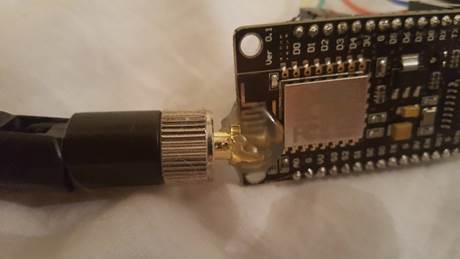
Increase the WiFi Range
Below are a few websites on DIY:
https://hackaday.com/2017/01/30/increase-the-range-of-an-esp8266-with-duct-tape/
https://forum.pimatic.org/topic/2618/greater-wi-fi-area-for-esp8266-01-with-external-antenna
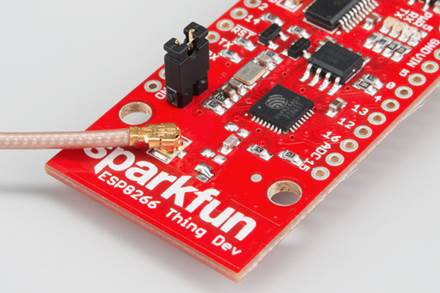
Some boards, like the ESP8266 Thing Dev, allow you to attach an external antenna to the onboard U.FL connector.